Showing posts with label CCSS. Show all posts

Saturday, January 31, 2015

This week in NJ ed 'reform': The truth is out there

This was quite a week in the battle over public education in the Garden State: Gov. Christie's testing study commission heard mountains of testimony from concerned parents and citizens in three different venues; educators continued to host parent Take the PARCC nights; NJEA released a bombshell new poll showing massive numbers of NJ parents oppose the test; and NJ101.5 capped several days of PARCC discussion with a debate over the test. 

Here are my thoughts:


A more perfect-er life for only $19.95

My daughter and I have a running joke: All the world's problems can be solved for only 3 easy payments of $19.95. If we just went out and purchased every single as-seen-on-TV product, our lives would be perfect.

That's what ed 'reformers' want us to believe about the PARCC test. Just like the PedEgg, the Bacon Bowl and the Uro Club, PARCC promises to magically transform your child's entire life from dull to dazzling—with just 10 easy hours of testing! No more struggles with 'bad' teachers who lazily sit around waiting to collect their pensions. PARCC will send them packing. White suburban moms will magically accept that their kids really aren't brilliant when they see those crappy test scores. But wait! Call now, and Pearson will upgrade your flunkie kid's educational experience with all sorts of Common Core/PARCC aligned learning materials guaranteed to make them College and Career Ready! (Just pay the cost of cuts to arts and foreign language programs.)


When TV pitch-men run the country

The reality is that the road to miraculous cures and a better, shinier, awesomer life is paved with money back guarantees that somehow never seem to materialize. Whether it's the infomercial host or the President of the United States, carnival barkers have been selling the American public an endless stream of bad ideas, sketchy products and outright colossal failures since 1893 when Clark Stanley sold his first bottle of snake oil. Here are some of my favorites from big business/pharma/government:

  • Cigarettes
  • Weapons of Mass Destruction
  • The Pinto
  • Lead Paint
  • Accutane
  • Asbestos
  • NAFTA
  • GMOs
  • Phen-phen
  • DDT
Feel free to add your favorites in the comments section.

Number 1 on my list is DES. 77 years ago, American doctors wanted pregnant women to have 'trust and confidence' (more on this phrase below) in a little life-changing drug called Diethylstilbestrol. Here's what the CDC says about it:
Diethylstilbestrol (DES) is an estrogen that was first manufactured in a laboratory in 1938, so it is called a "synthetic estrogen." During 1938-1971, U.S. physicians prescribed DES to pregnant women to prevent miscarriages and avoid other pregnancy problems. As a result, an estimated 5-10 million pregnant women and the children born of these pregnancies were exposed to DES. Physicians prescribed DES to pregnant women on the theory that miscarriages and premature births occurred because some pregnant women did not produce enough estrogen naturally. At the time, physicians thought DES was safe and would prevent miscarriages and pre-term (early) births. 
In 1953, published research showed that DES did not prevent miscarriages or premature births. However, DES continued to be prescribed until 1971. In that year, the Food and Drug Administration (FDA) issued a Drug Bulletin advising physicians to stop prescribing DES to pregnant women. The FDA warning was based on a study published in 1971 that identified DES as a cause of a rare vaginal cancer in girls and young women who had been exposed to DES before birth (in the womb). (emphasis mine)
Doctors continued to prescribe DES to pregnant women 18 years after it was proven not to work. We now know that exposure to large doses of estrogen is linked to breast cancer. That's why commonly-prescribed hormone replacement therapy (HRT) was yanked from prescription pads years ago. But my mother wasn't spared. She took DES when she was pregnant with me, and died of breast cancer at age 37. And as a 'DES Daughter' I have suffered a host of medical issues because I was exposed to it in utero. Suffice to say that both my children are true miracles. 

I'm not looking for sympathy. I'm writing this because I am living proof of what happens when the government or big business or some other faceless entity tells us that what they're doing is wonderful, transformative and fantastic for everyone, and we should just accept it lock, stock and barrel. Which is exactly what Dr. Sandra Alberti asked of NJ parents this week when she and NJEA President Wendall Steinhauer engaged in a friendly PARCC debate on NJ101.5. 

Dr. Alberti works at Student Achievement Partners. Founded by David Coleman, Susan Pimentel and Jason Zimba, lead writers of the Common Core State Standards, SAP is "a non-profit [alarm bells!] organization with one purpose: to help all students and teachers see their hard work lead to greater student achievement."

(Note to self: Find out how that 'all' includes art teachers.)

Like other PARCC cheerleaders, Alberti was practically breathless with excitement about how these tests were going to be the best think since... well... Jeaneez! 


Her voice got louder, her pitch got higher as she implored the listening audience "to have trust and confidence" in the PARCC.


Trust no one


Call me Fox Mulder, but I've gone through enough ccrap (pun intended) living with the effects of another miracle cure that when 'reformers' try to sell me a load of hokum about the miracle of PARCC, I start looking for Cigarette Man hiding in the shadows.

Just like DES, there is no proof, no evidence, no long-term study proving the miracle of PARCC. But unlike DES, we don't have to wait 15 years to figure this out. As the tag line of The X-Files says, "The truth is out there" right now (here, here, here, here, here). 

Dr. Alberti finished her comments by saying, "Imagine if all that energy was going into working with kids to help them succeed...we would have such amazing schools in New Jersey." 

The fact is we do have amazing schools in New Jersey—many of the best in the nation. And we have amazing education professionals who have dedicated their entire careers to working in the classroom, not at some non-profit or think-tank, to help kids succeed. We also have high concentrations of impoverished Black and Brown students attending public schools in our inner cities, and a governor who thinks the best way to fix this is by cutting almost $6 billion in public education funding. 

Imagine if all the money that is being wasted on band width and Chromebooks and test prep and data collection and advertising and charter schools and Teach for America and buying candidates and think tanks and non-profits and partnerships and summits and conferences and Regional Achievement Centers and the endless, endless layers of new administration in state-controlled districts was actually "going into working with [impoverished] kids [and their families] to help them succeed...we would have such amazing [children and families] in [all of] New Jersey."


Final thoughts

In the past 3 months the amount of parental push-back against the PARCC in NJ has grown exponentially. Polling numbers against the test are through the roof. School districts are scrambling to figure out how to respond to the growing number of test refusal letters. The State Board of Education and Hespe's testing commission look like deer in the headlights having been hit with a tidal wave of criticism at board meetings and public hearings around the state. The sleeping giant has awoken. The parents will win, because the truth is out there.



Sunday, December 7, 2014

'College and Career Ready': the big, fat myth of standardized testing


Hats off to Delran, NJ Education Association President Mike Kaminsky (@MKaminskiNJ) and his leadership team! They are doing excellent work in the push back against education 'reform'. Not only did they recently host both a showing of "Standardized" (trailer above), and a Take the PARCC night, Delran also threw down the gauntlet with this very powerful statement against standardized testing, posted on DEA member and fellow ed blogger, Ani McHugh's Teacherbiz blog:


We, the members of the Delran Education Association, believe that authentic, teacher-created assessments are an important component of any successful instructional program. However, we stand in defiant opposition to the New Jersey Department of Education’s obsession with the use of high-stakes standardized testing, both in our own district and in districts across this state. 

And that's just the beginning. It's a perfect overview of education 'reform' and standardized testing for folks who haven't read every book that's been published on the subject over the past few years.  


Show me the money!


Along with about 350 other concerned parents and educators, I attended the Take the PARCC event, which was a BYOPD affair. The first half hour was spent trying to get everyone in the room logged on to the Pearson website to take the sample test. I'm hoping that all works out statewide on actual testing days because Acting Commissioner Hespe assures us that over 90% of school districts across the state are tech ready. And for those that aren't, he's got about $1.3 million in grant money... for the whole state. 

Gov. Christie has cut close to $5 billion in education funding since he was first elected, and the devastating effects are still being felt. So I'm happy that the state managed to scrape together a few bucks for cash-strapped school districts. I'm sure the good people of Bernards Township, one of NJ's many affluent and successful suburban districts, are thrilled that, despite their hefty property tax bills, they will have to raise about $900,000 to replace their turf fields, which have a shelf life of 10 years, because the state could only cough up $58K to help 'em out with their tech upgrades. That's a whole lotta bake sales.


Source: Bernards Twp. School District website

The state itself has spent about $27 million so far to gear up on their end. Where'd they get that money? The pension system and the transportation trust fund have been raided to the bone, but we magically have $27 mil to—oh silly me! The money must be found because this is for the edupreneures children.


Angry Birds? No, Angry Parents!


Once everyone was logged on, Ani and Mike led the audience through some of the nuances of the platform, and it quickly became clear that this test is first and foremost about computer skills. If the students don't have them, they won't do well—period. The size of a Chromebook screen isn't much bigger than an iPad. Students have to read passages and mathematical equations, answer questions, keystroke essays and scroll through text on something with which many have very little experience. And it starts in third grade. Many administrators know this, so they're scrambling to get as many of these devices into the hands of as many students as possible. I don't care how much time the average 8-year-old spends on the computer, playing Angry Birds for hours is a whole lot different than this:


That's 9 days of testing, folks: 5 in March and 4 in May. Once that sunk in, the demeanor of the room quickly changed. The Q&A session progressed rapidly from 'how can this happen?' to 'how can I opt my kid out?' Several parents stood up to announce community groups and Facebook pages they've started in order to organize and inform other parents. So much for Hespe telling us at the NJEA Convention that he isn't "aware of any opt out movement in the state." By the end of the night, I think there were more interpersonal connections made than Internet connections.  

The biggest takeaway of the night was this: Parents have to lead this revolution. Teachers can and do lead the fight on other ed 'reform' battles, but the front lines on testing must be filled with parents. And my money is on the parents of special needs children because they always have to fight, and this one's gonna be particularly ugly.


The big, fat myth

The bottom line is that Common Core and the PARCC will not magically make every child #CACR—'college and career ready'. It's not about developing a generation of super students or magically lifting every single child out of poverty. It's all about money, and the money is the hostage. The message Arne Duncan sends to school districts all across the country is this: if your students don't hit their cut scores, you don't get your money. If it really, truly were about helping all students succeed, K-12 educators would not have been given a seat at the table, we would have been given the whole damned table. If it really, truly were about helping all students succeed, K-12 educators would be able to rely on their own assessments to guide their instruction, instead of assessments developed by people who are not necessarily K-12 educators and that may be scored by Craig's List hires or robots (yea, don't get me started). 

Case in point: I was recently interviewed by New Jersey News12 on the state's gear-up for the PARCC. Commissioner Hespe was also interviewed. To be fair, much of an interview gets left on the cutting room floor. The reporter spent about a half hour interviewing me for what amounted to a 30 second sound bite. But, listen to Hespe's comment at the 2:28 mark:
[PARCC is] going to prepare students for the tests of the future.
That is what Hespe thinks the PARCC will do, and I don't know about you, but that scares the bejeezus outta me. The flawed tests are based on a flawed set of standards that the teachers must teach so the students can get better and better at taking flawed tests. 

For all the data mining that now happens to our children, the founding fathers of CCSS and PARCC refuse to acknowledge some startling data from the US Census Bureau, brought to you by ed blogger extraordinaire, Lloyd Lofthouse: 

  • 26% of [US] jobs do not require a high school degree, but only 11.8% of the adults who dropped out of high school are qualified for these jobs. More than half are overqualified.
  • 40% of the jobs require a high school degree, but more than 88% of Americans have a high school degree—more than double the jobs that require this much education.
  • For the sake of simplicity, I’m going to combine everyone with a college degree—associate degree, BA, masters, professional and doctorate—and only 27% of the jobs in America require one of these college degrees, but 53% of the adult population might be qualified for these jobs—more than twice the number required. 
This means a large sector of the American work force is highly over educated and working in jobs that don’t require the education they earned, because those jobs do not exist. 
In addition, if there are shortages of skilled workers in some fields, how can that be blamed on the public schools, teachers and teachers’ unions? After all, Americans pride themselves on the freedom of choice regarding their lifestyles, and our children and adults make academic choices as they age. For whatever reason, these choices lead to dropping out of high school or staying in school to graduate and/or go on to earn an associate, BA, professional or doctorate degree. If an individual majors in the wrong field, do we blame K–12 teachers for that, too? (emphasis mine)
Another ed blogger, Leonard Isenberg, who writes at perdaily.com summed it up this way:
50% of recent college graduates with degrees are working at jobs that do not require one, e.g. waiter. Add to this the fact that the total capacity of all colleges and universities in the U.S. is just 30% of high school graduates and one wonders what the rest of students are supposed to do in a privatizing education culture that has closed public school industrial arts and other alternative career and trade programs.

So, students are graduating college with Cadillac degrees only to find work in the Edsel factory. The CCSS and PARCC will not solve that problem, but they will make a boatload of money for the testing industry. And while college debt is at record highs, that debt, unlike corporate debt, isn't erased in bankruptcy.  


Essential questions

Parents, before you make sure your child is well-rested and well-fed for test days ('cause the other 171 days aren't really important), blogger Peter Greene, has put together this handy list of questions for you to bring to the next NJ State Board of Ed meeting January 7th:
The Partnership for Assessment of Readiness for College and Careers... is a magical magical test. It can tell with absolute precision, how prepared your student is for college or career because, magic. And who wouldn't want to know more about the powerful juju contained in the PARCC test. 
So if Mr. Hespe and any of his friends come to explain how crucial PARCC testing is for your child's future, you might try asking some questions.

  • Exactly what is the correspondence between PARCC results and college readiness. Given the precise data, can you tell me what score my eight year old needs to get on the test to be guaranteed at least a 3.75 GPA at college?
  • Does it matter which college he attends, or will test results guarantee he is ready for all colleges?
  • Can you show me the research and data that led you to conclude that Test Result A = College Result X? How exactly do you know that meeting the state's politically chosen cut score means that my child is prepared to be a college success?
  • Since the PARCC tests math and language, will it still tell me if my child is ready to be a history or music major? How about geology or women's studies?
  • My daughter plans to be a stay-at-home mom. Can she skip the test? Since that's her chosen career, is there a portion of the PARCC that tests her lady parts and their ability to make babies?
  • Which section of the PARCC tests a student's readiness to start a career as a welder? Is it the same part that tests readiness to become a ski instructor, pro football player, or dental assistant?
  • I see that the PARCC will be used to "customize instruction." Does that mean you're giving the test tomorrow (because it'a almost November already)? How soon will the teacher get the detailed customizing information-- one week? Ten days? How will the PARCC results help my child's choir director and phys ed teacher customize instruction?
  • Is it possible that the PARCC will soon be able to tell me if my eight year old is on track for a happy marriage and nice hair?
  • Why do you suppose you keep using the word "utilize" when "using" is a perfectly good plain English substitute?
  • To quote the immortal Will Smith in Independence Day, "You really think you can do all that bullshit you just said?"
The PARCC may look like just one more poorly-constructed standardized math and language test, but it is apparently super-duper magical, with the ability to measure every aspect of a child's education and tell whether the child is ready for college and career, regardless of which college, which major, which career, and which child we are talking about. By looking at your eight year old's standardized math and language test, we can tell whether she's on track to be a philosophy major at Harvard or an airline pilot! It's absolutely magical!

Never has a single standardized test claimed so much magical power with so little actual data to back up its assertions. Mr. Hespe would be further ahead to skip his fancy final paragraph and just tell his people to look parents in the eye and say, "Because the state says so." It's not any more educationally convincing than the magical CACR bullshit, but at least it would be honest. (emphasis mine)

But for all its promises of miraculously making every single child in the United States 'college and career ready', the PARCC test is quickly wilting under the bright lights of scrutiny. As of this writing, only 12 of the original 26 states that signed on, plus the District of Columbia, are participating. When K-12 educators do not take an active role in designing the curriculum and the accompanying assessments, the result is a deeply flawed, poorly executed grand experiment that will ultimately crash and burn.

Final thoughts

As the US moves more and more toward an education system like China's, China has seen the error of its truly rigorous ways and is moving more toward a system like what ours used to be—one that embraced minds like Einstein's as something to be celebrated and nurtured, not standardized. 


Sunday, November 9, 2014

.@pasi_sahlberg & David Hespe: A Tale of Two Education Leaders


Lest anyone think I was a fat-cat, lazy teacher, raking in the chips at a high-rollers roulette table at the Borgata last week, I actually attended the NJEA Convention—the largest professional development convention for educators in the United States.


There are no coincidences


I don't believe in coincidence. Too many things have happened in my life for that word to be relevant. Case in point: here's what happened last week:

  • I read an article in the Star Ledger about why Dutch children are happier than ours
  • I listened to Pasi Sahlberg's keynote address at the NJEA Convention in Atlantic City—a town whose economic fortunes seem to change like the tides that wash its shores every day, and right now, the tide is out 
  • I attended the meeting with Acting NJ Education Commissioner, David Hespe, also at the Convention
  • I read this post on Wallet Hub ranking the best and worst school systems in the country. 

Please excuse me while I puff up my chest with pride... Lookie who's #1:


... and look who's at the bottom: some of the highest concentrations of poverty in the country, including Michelle Rhee's 'miracle'—Washington, DC:


About the Dutch 


According to the article,


UNICEF recently conducted a study of twenty-nine industrialized nations and found that the Netherlands ranked highest in three out of five areas: educational well being, material well being, and behavior and risks. This study, named Child Well Being in Rich Countries, correlates with the findings of numerous other studies noting that Dutch children are seemingly happier.

Among the study's notable findings:

  • The Netherlands retains its position as the clear leader, and is the only country ranked among the top five countries in all dimensions of child well-being: material well-being, health and safety, education, behaviors and risks, and housing and environment.
  • Four Nordic countries — Finland, Iceland, Norway and Sweden — sit just below the Netherlands at the top of the child well-being table.
  • The bottom four places in the table are occupied by three of the poorest countries in the survey — Latvia, Lithuania and Romania, and by one of the richest, the United States.
  • Indeed, the United States and Romania were the only two countries out of 29 surveyed to rank in the bottom third on all five measurements of childhood well-being. (emphasis mine)

The wealthiest nation in the industrialized world does not value the health and well-being of its children. 


That, dear readers, should be plastered over every picture of every jackpot bonanza on every billboard leading into this city-on-life-support. And it should be on the cover of every standardized test booklet Pearson prints.

Yea, so that won't happen. But I bring you the next best thing: Pasi Sahlberg's keynote speech and David Hespe's Q&(non)A with teachers—all within 24 hours! If you're not sure who Sahlberg is, read his bio here. Blogger Ani McHugh (TeacherBiz) wrote an excellent review of his talk. You can view his Power Point presentation here. Pull both up on your screen as a comparison to what follows. 

Before we get into the meat of Hespe's session, here's a handy little pocket guide to Finnish vs. US education (all quotes are Sahlberg's):


Before Hespe took questions, he talked about where we were, where we are and where we're going. As he talked, the groans, murmuring and comments from the audience increased. In the interest of readability, I've interspersed audience questions with his presentation comments.

So, do you have Ani's blog post open? Ok, here we go!


On 'college and career readiness' (whatever that means)

He started by acknowledging that there is an achievement gap between the rich and poor in NJ—finally! We are one of the highest-achieving states in the nation, and we should be proud of that, but our bar is set too low. He showed a slide of 4-year college graduation rates in NJ which he said aren't good enough. I'm sorry, I don't have a photo of this slide. It was tough to photograph in that room. If anyone has it, please post. He blamed this on students not being 'college and career ready'. Too many college freshmen have to take remedial math and language arts classes. 

Not being satisfied with the data he provided, I did a little research of my own and found a nifty little website chock full of all sorts of data. 

Consider this overview of NJ's state universities:

Not too shabby.

Or this comparison with the rest of the country:


I am not an education researcher, but I do know that data is often manipulated to tell a certain side of a story. These links to nj.gov websites provide additional info on NJ higher education. I invite you to do your own research:


While Hespe and his ilk are quick to blame 'bad teachers', not enough 'rigor' and not enough standardized testing, the students themselves have a different take:
Students say they are delaying their degrees because of class-scheduling difficulties and overcrowded courses or the pressures of juggling part-time jobs and financial problems. That means many full-time undergraduates are taking five, six or more years to get a bachelor’s degree, if they finish at all.

Hmmm... the state hasn't fully funded our community colleges as per the law for years. Could there be a correlation? Call me crazy, but isn't it possible that this generation of college students—the first to go through some or all of their K-12 education in the NCLB years—is simply a product of that failed policy? Have the language arts and math college placement exams ever been evaluated? Do we know that they are true measures of what students should know? How much money do colleges and universities make on them? So many questions; no answers. 


On tech readiness for PARCC

Hespe claimed that over 90% of schools are technologically ready for PARCC testing. Cue audible groans and protestations from the audience. During the Q&(non)A, several educators told him their horror stories with practice PARCC tests: servers crashed, answers lost, not enough equipment, students not ready or able to keystroke essay answers. Even though school budgets have been slashed and staff laid off, the tests must go on! So districts are scrambling to find money to pay for all the upgrades which can cost anywhere from hundreds of thousands to millions of dollars. Many are simply not ready because they don't have the money. But Hespe wasn't concerned. He said the DOE has about $1.3 million to give to districts throughout the whole state!  Yipee!! I feel so much better.

One educator wanted to know when the state was going to provide money to rehire all the lost staff. Pshaw! What a silly question! Why should districts re-hire bad teachers when data will solve every educational problem? 


On the opt-out movement

"I'm not seeing an opt-out movement in New Jersey."

"About 1/10 of 1% of parents are opting out."

"I see no opt-out movement in New Jersey."

Hey, Commish, check this out, and this, and this on Long Island. 

The PARCC was only piloted on about 10% of NJ students. It's only November. Once the rest of the state's parents see how much of their child's school year is spent on test prep, once they participate in the various 'Take the PARCC' events that are quickly popping up all over the state, once students are tested and their scores plummet (is anyone doubting they won't?), this movement is going to grow very quickly. This is not, as Arne Duncan said, 
white suburban moms who — all of a sudden — [realized] their child isn’t as brilliant as they thought they were, and their school isn’t quite as good as they thought they were.
This is a movement of concerned parents all across the state who are fed up with their child's education being hijacked by data collection and profit-making.

Data Dave, standardized testing and the CCSS

It is abundantly clear that data is Hespe's friend. I think he loves data more than he loves students. I can't tell you how many times he used that word. He was giddy with anticipation about how all the data the NJDOE collects will be used to solve all our socioeconomic problems and manufacture a super human workforce! He was adamant that parents are hungry for data! Yea, and standardized testing and data were huge parts of FDR's New Deal, and LBJ's Civil Rights Act, and Brown v. Board of Education, and Abbott v. Burke, and...

Questions and comments from educators on data, testing and the CCSS: 
"We do not need data! We know what to do for our students!" 
"You have more than a decade of data. What are you doing with it?"
"My child isn't failing standardized tests. Standardized tests are failing my child. What will you do?" 
"The data teachers are expected to manage is unmanageable! Data is garbage collection!" 
"There is no correlation between standardized tests and student achievement. Why not scrap the tests and go back to teaching?"
"Where are the accommodations for special education students on PARCC?" 
 "There is no data that says the Common Core State Standards are effective. How can you support them when they're not proven?"
"Other than test scores, how do we define and measure success?"
"Our kids aren't 'college and career ready' because we are a culture of testing!" 
  

Cuts to related arts and other programs

Comment: We need leadership from you to preserve the arts.
Answer: Teach across the curriculum.


On Camden

Questions and comments from educators:
"Since the state takeover of Camden, teachers do not have the materials and curriculum to do their job. The materials are coming from North Star Academy [charter school]." 
"How do you support teachers when you appoint a Camden superintendent with no teaching experience?"
"When will you come to low-income communities to see what's going on?" 
Hespe actually answered this last question. He simply said, "Done!" I hope the person who asked that question holds him to it.


On Student Growth Objectives

When he asked the crowd of several hundred how many wrote their SGO collaboratively with their administrator, less than 10 people raised their hands. 


A ray of hope?

To his credit, NJEA President Wendell Steinhauer did his best to keep the questions to 30 seconds and the crowd from wielding pitchforks and torches. There was a lot of calling out when a question or comment was cut off, or simply not answered—and there was a lot of that. Hespe is first and foremost a politician. As a Christie appointee, he is there to do his bidding. He may have taught college classes, but he has absolutely no concept of K-12 education. 

The one sign of hope is the new board president, Mark Biedron. In September the Garden State Alliance for Strengthening Education held a symposium to "present a statewide action plan to connect critical elements supporting New Jersey public school educators and effective teaching." The coalition's founding members are:

  • NJ Association of Colleges for Teacher Education
  • NJ Association for Supervision and Curriculum Development
  • NJ Education Association
  • NJ Field Directors Forum
  • NJ Parent-Teacher Association
  • NJ Principals and Supervisors Association

In the audience were educators, legislators, NJ State Board of Ed members and DOE employees. I attended, and it was excellent. Too much to go into here, but suffice to say that it's a real plan to strengthen teacher training and retention in the state. Biedron and many in the state legislature are very excited about its implementation.

Final thoughts

The United States is indeed the most powerful country in the world. We can obliterate just about any other nation with the push of a button. But, can we really call ourselves the "greatest" when the plain, simple truth is we are neglecting our future—our children— because competition and profits are more important? 

Jesus said, "That which you do to the least of my brothers, you do unto me." No matter what your beliefs about him—whether the Son of God, a really smart guy or a fictional character—he was absolutely right. 

When it comes to educating our children, the US and NJ are absolutely wrong.


Tuesday, July 15, 2014

More on Christie's Executive Order, AchieveNJ & PARCC

Keeping this short and sweet because Ani McHugh (aka. TeacherBiz) and Jersey Jazzman both wrote excellent analyses of all that transpired in the life of A3081/S2541. 

Let's cut to the chase. Here's what the weights in educator evaluations will look like next year: 


In addition, any educators who were rated ineffective or partially effective in the '13-'14 school year can have their evaluation reviewed. (more on this below)

I spent a lot of time reading various opinions on this deal. Some people are not happy. They think NJEA sold out. They think the association didn't do enough to stop the testing and protect children. But Ani's response is on point:
Many people (parents, students, educators) in the state are frustrated and angry that students will still have to take PARCC exams in the 2014-2015 school year–but it’s important to understand that a delay of PARCC implementation was never part of A3081/S2154. Even if it were, though, students would still have to take whatever tests would replace the PARCC–be they Smarter Balanced assessments or revised NJASK/HSPA tests that would have had to be rewritten to align with the Common Core.
In short, the PARCC is just one form of Common Core testing–the one New Jersey chose to use–and as long as New Jersey is a Common Core state that’s receiving federal funds under Race to the Top, our students will have to be tested in accordance with the federal mandates that accompany these initiatives.  If we weren’t subjecting students to PARCC testing, we’d be subjecting them to something very similar–and no doubt equally flawed, equally expensive, and probably equally invasive of their rights to privacy.
Folks, no matter what you think NJEA did or didn't do, all our children—my own child included—still have to take the tests, unless we as parents decide to opt them out. 

I and dozens of other educators from around the state testified at every NJEA State Board of Ed Lobby Day this past school year about the need to slow down the implementation of high stakes consequences for high stakes tests because educators were tearing their hair out trying to keep up with everything that was thrown at us and our students. Thousands of letters were sent to board members. None of us (that I can recall) ever asked the board to completely eliminate the standardized testing because they can't. 

So, the fact that standardized tests will only count for 10% of evaluations next year is huge, because if educators aren't stressed and overwhelmed, their students won't be either, and that is a win-win for parents and schools. Is it perfect? No way. There are still major flaws with AchieveNJ which Duke points out below. But the fact that educators who were rated ineffective or partially effective will be able to challenge those decisions is important because as anyone who sat through those Board of Ed meeting knows, there have been some real horror stories about botched observations coming out of school districts all across the state. All year, our message to the State Board of Ed has been, "Slow down and get it right." We got the first part; now it's up to Christie and the task force to get the second part right. 

The writing was on the wall with this one: although the bill had overwhelming bipartisan support, Christie would never, ever sign it because in his world, 'bipartisanship' only works if it can increase his political viability in places like Iowa. The executive order allows him to still pull the strings. 

As Duke points out:
There was, of course, no chance of Christie ever signing that bill into law. So we can debate the effectiveness of NJEA's strategy on this -- but here's what's not debatable:
Christie's executive order is all the evidence anyone needs that AchieveNJ -- the state's teacher evaluation system -- is built on a foundation of sand.
In the spring of 2013, then-Former Acting Commissioner Chris Cerf and the state BOE decided, on a "feeling," to arbitrarily change the percentage of a teacher's evaluation based on test scores to 30 percent from 35 percent. There was no research basis for this whatsoever, but no matter: it's our "feelings," after all, that really count...
Now, I guess the governor "feels" 10 percent is good for this coming year, but 20 percent will be good afterward. Why? Because he says so, that's why!

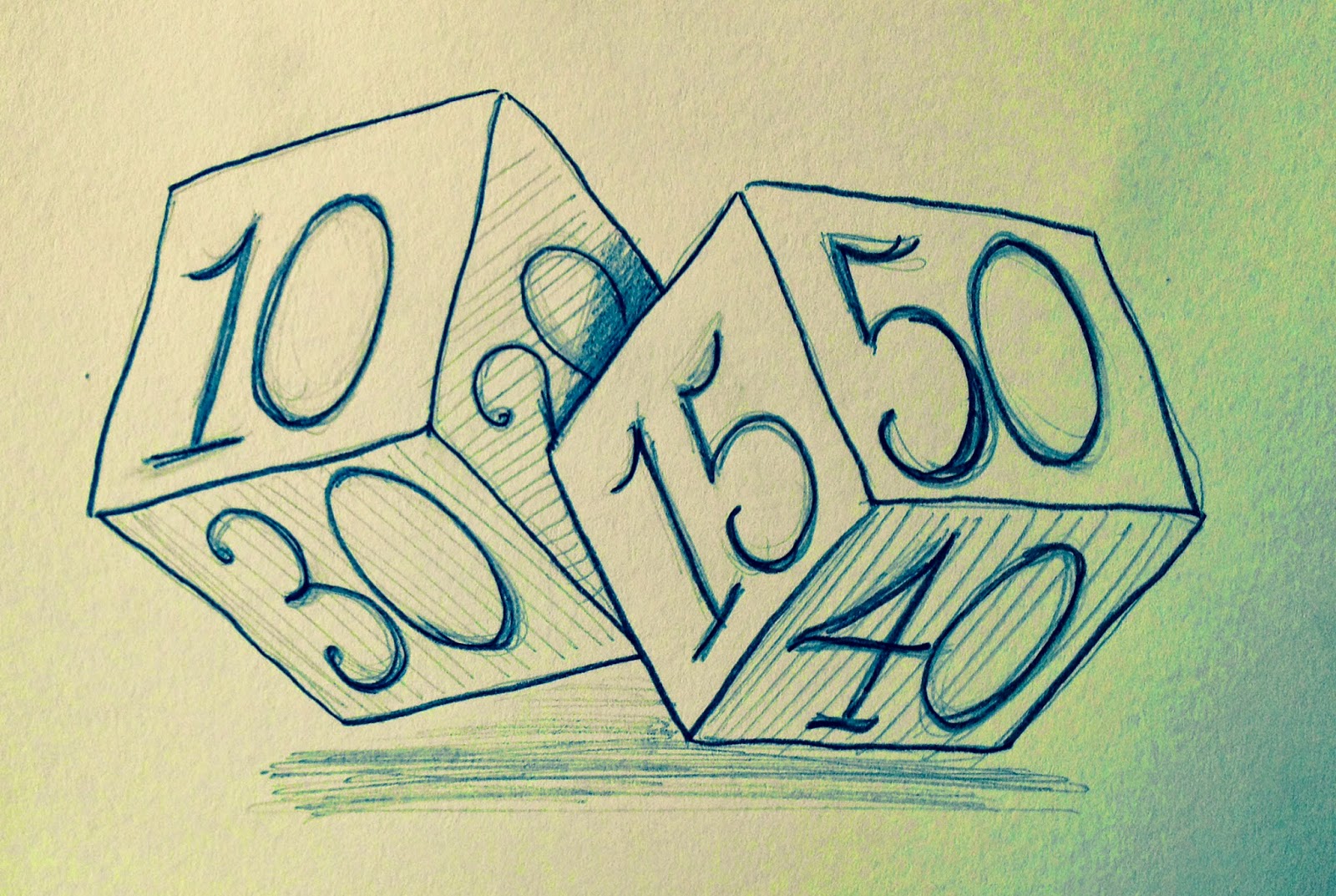
As for what happens after 2016? Who knows? One thing is certain: Christie will be gone. Then maybe, just maybe we can elect someone who won't make education policy decisions like this:


10 minute sketch-kinda sums it up. Depressing.


Thursday, July 10, 2014

NJ BOE Testimony Part III: Horror Stories from Paterson


Be sure to check out NJEA member testimony at the NJ State Board of Education Parts I and II.


So, you think you have it bad. You think your administrators didn’t fully implement the new evaluation system. You think you could have gotten a higher score in this domain or that. How would you like to be an educator in a state controlled district? Paterson Education Association member, Gennaro Tortoriello, paints a shocking picture of administrators gone wild in his state controlled district. And to think, the state took over Paterson because they deemed it 'failing'. If this is their idea of improvement, everyone at the department of education should resign.


◊◊◊◊◊◊◊◊◊◊◊◊◊◊◊◊◊◊◊◊


Thank you for your time. I would like to speak about the evaluation system that was very hastily implemented by the state without proper training for both administrators and teachers. As a grievance delegate in the Paterson Education Association, I have witnessed the effects of this unjust system throughout my school district on a daily basis. Here are some examples:
  • Some administrators have been told by their superiors that they are not allowed to give teachers high scores.
  • Some administrators have told teachers that they work in a failing school and failing district therefore there are no effective teachers. In School 13 70% of teachers have been placed on a CAP (Corrective Action Plan).
  • The principal of one school told the staff that 80% of them are incompetent and should not be educators.
  • In many of our schools special education teachers have been directed to not follow the legal mandates of student’s IEPs if they want to earn a proficient observation.
  • One administrator in School 18 has written fraudulent observations and has egregiously violated the terms of the collective bargaining agreement, state law, and district policy because tenure is “dead”, and “we can do whatever we want to them.”
  • Educators have been told that instruction must be data driven yet many administrators ignore data when conducting evaluations.
  • Educators have been told that lessons must be differentiated yet when instruction is modified teachers are told that their lessons are not rigorous enough.
  • When educators use the whole group instructional method they are sometimes told that they did not differentiate the lesson and did not make accommodations for exceptional students.
  • One administrator in a high school marked staff down for not creating ‘data walls’ where student test scores were to be posted as a way to make them improve. When association officials pointed out that that is a violation of student privacy rights protected by FERPA, the administrator told them to use student ID numbers instead. When the association pointed out that students are not supposed to publish or share their ID numbers, the administrator relented, but refused to reassess staff ratings.
  • The majority of staff rated partially effective or ineffective met their SGO’s. Can somebody explain how this is possible?

These are only some examples. There are many more. This system has created an environment of distrust in which the evaluation system is viewed as discipline and punishment rather than an opportunity for professional growth. As you can see, this system has led to an abuse of power by many administrators. Please repeal this system. (emphasis mine)

Thank you.

NJ BOE Testimony Part II: Was human error or intentional omission to blame for PARCC pilot report?

Be sure to check out Parts I and III in this series.


In part 2 of this series of posts on NJEA's July 9th lobby day at the state Board of Ed, Spanish teacher and education activist, Heidi Maria Brown, questions Data Commissioner Bari Erlichson's obvious omission of any negative feedback on the state's PARCC trials, and why some board members have not done more to get to the truth.

◊◊◊◊◊◊◊◊◊◊◊◊◊◊◊◊◊◊◊◊

Good afternoon. My name is Heidi Maria Brown. I’m here today with my family. My husband is helping me with our two boys, Johnny and Nicholas, both of whom attend the amazing public schools in Pitman, New Jersey. We came here today despite the fact that following testimony, we have a wake to attend and a funeral tomorrow. That is how important I feel this opportunity is.

Throughout the past school year, I attended three board of education meetings. Initially, the experience was very positive. However, over time, it became quite discouraging because it appears that my testimony has fallen on deaf ears.

I recently met with my legislative representative, Assemblyman Paul Moriarity (D4 – Camden, Gloucester). When I first spoke with Mr. Moriarity, he mentioned that some of my concerns could be explained by human error. I concurred that perhaps one or even two misstatements could be explained by human foil. However, the number and type of misstatements are worrisome considering that the Department of Education is also responsible for determining test scores and teacher evaluations.

At the May 7th BOE meeting, Data Commissioner Bari Erlichson evidently misspoke with regards to the number of hours students spend testing. Students test for four days, not one. And many of our students with IEPs and 504s test for about six hours a day, not two. That means that contrary to her statement, students were in testing anywhere from eight hours to as many as 24 hours. What will this mean for our students when they take the PARCC, which is a much longer test? Has anyone considered this? If the BOE doesn’t have an accurate understanding of testing conditions, due to misinformation, how can they properly serve our students? Again, this may have simply been a misstatement. So let’s look at another example.

Erlichson made statements and provided evidence regarding the success of the first PARCC pilot. When presenting social media clips regarding the public feedback, she presented 100% positive feedback. I found this surprising because I had spoken with several teachers in various districts who confirmed that the computers froze and the testing was problematic from a technology perspective. Several parents also posted negative feedback on Facebook regarding testing and the PARCC, but I saw no evidence of this in her report. Board member Edithe Fulton immediately questioned the lack of negative comments. The response to Ms. Fulton was that this was due to the “abbreviated” board session. Does that justify incomplete and allegedly misleading and one-side data presentation? Perhaps this omission was simply “human error”.

Furthermore, while the statement was made that 70 percent of districts piloted, it should be noted that only 10 percent of students within those districts were actually tested. This means that we really don’t have an accurate picture of what full implementation will mean for this fall. This method of cherry picking data to provide evidence seems to be more than a misstatement.

During this same board meeting, Erlichson depicted a doom and gloom report of New Jersey’s NAEP scores. Apparently, our growth was, “flat”. Later, after reviewing the results independently, I was surprised to see that New Jersey’s 8th graders are first in reading and second in math. Why was so little made of this success? Was this omission just a mistake?

Frankly, I’m beginning to wonder how accurately informed the board of education is, not to mention your level of engagement in terms of asking critical questions when questionable data is provided as truth. At the June 4th and 11th public hearings to examine the CCSS, only one board member, Joseph Fisicaro, attended. Why? I work two, sometimes three jobs, I have two little boys and I volunteer in my local township. I still found time to review the standards, draft feedback and give professional analysis of the World Language standards. Nobody had to pay me to show up. I did it, because I care.

During the past five months, I have witnessed enough testimony here at the BOE, at several legislative meetings, and throughout New Jersey, to know that there are serious problems with the implementation of the teacher evaluation, the PARCC testing and the leadership of our struggling, economically challenged districts like Newark, where under Cami Anderson’s deplorable leadership, the district spent $330,000 on take-out instead of school supplies, maintenance needs, technology upgrades, classroom teachers and aides. It was reported by NBC news that students will not have enough desks this year and teachers will have to take a pay freeze because Ms. Anderson felt it was appropriate to spent $22,000 a month for catering. I guess the chicken and sides must be good. But I digress.

In March, I witnessed the delivery of nearly 2,000 letters to the Board of Education from teachers, parents, and community members, imploring you to address these concerns. In May, despite the conflict of NJASK testing, several teachers reported similar concerns to the board. In June nearly 30,000 NJEA members participated in a town hall conference call with Senate President Steve Sweeney to discuss these concerns. But you don’t have to listen to me or my colleagues. All you have to do is read the paper, go online or watch the television to know that there is a real crisis - not with our schools - but with these un-vetted reforms being rushed to implementation.

And since it’s evident that many misstatements have allegedly been made due to human error, we need you to listen to us. The truth is we don’t really know if we’re ready for the technology demands of the PARCC. We don’t know how much this has cost or how much it will cost in the future. We don’t know that the data management system is secure or who will have access to our children’s personal, and legally protected data. The fact that Assembly Bill 3081 passed 72-4, and that the sister bill is to be posted for a senate vote tomorrow*, makes it clear that this process is not going well and we are not ready. (emphasis mine)

So, do what you need to do. I will follow my conscience and follow up with Assemblyman Moriarty. Because based on the information I provided, he agreed that there seems to be more than just, “human error” at play. I will continue to write letters to the editor and educate my community about opting out of the PARCC, a new NEA initiative, and we’ll just wait to see how this turns out. Ultimately, I will be able to sleep at night with a clear conscience.

Heidi Maria Brown has an MFA in theatre from Temple University and a BA in Spanish from Western Washington University. She has 10 years experience teaching in public schools and 9 years as an adjunct professor. She currently teaches Spanish in the Pittsgrove Township School District in Salem County, NJ.


* Note: As of this writing, it is not clear if S2154 will be posted for a full Senate vote. For all the breaking developments, be sure to follow Save Our Schools NJ on Facebook and Twitter.