Showing posts with label education evaluation. Show all posts

Sunday, July 12, 2015

Data does not a great teacher make

And so the data reporting begins. 


The Star Ledger reported yesterday:
For the first time, New Jersey's Department of Education will publish a centralized database with the aggregate teacher evaluation results for each school across the state. 
The 2013-14 data, to be released next week, will not include performance ratings for specific teachers. But parents will be able to see how many teachers in a school received each of the four possible ratings, according to the state....Before 2013-14, teachers were essentially graded on a thumbs up or thumbs down system, based on a century-old law that required evaluations. Nearly 100 percent of teachers were deemed acceptable....More than 97 percent of New Jersey teachers received positive evaluation scores for 2013-14, the state announced in June (Hmmm... 97% isn't that 'nearly 100%'? Just sayin'.) But unlike previous years, the new system creates more distinction between perforance levels and allows the state to further analyze the data for useful trends. 
For example, teachers in their first or second year were twice as likely to receive a "partially effective" review as more expereinced teachers. 
Meanwhile, experienced teachers were twice as likely to get the highest rating. (emphasis mine)
Ah, ya gotta love the irony. Nothing screams, "We need excellent educators in every classroom!" like underfunding public education, piling enormous amounts of data collection and test prep on top of all the mountains of work classroom teachers already have, blaming, shaming, disrespecting, devaluing, under-paying, slashing and burning, VAM-ing and scaming us into thinking all of this is good 'for the children'. No wonder 40-50% of educators leave the profession within the first 5 years.

Education 'reformers' from coast to coast beat the war drums against seniority and bow to the Holy Grail of data, but will they have the guts to face the data that shows that, as in every other profession, experience matters?

Ask any veteran educator and they will tell you that if they could go back and re-do their first 5 years teaching, they would do things much differently. Experience builds competence; practice makes progress. It's a no brainer—except in 'reformy land'. I hope they have 'some fava beans and a nice chianti' on hand to wash down those words they have to eat. You know... the ones that say we're all just a bunch of lazy oafs, waiting to collect our pensions.

Which brings me to this:


Last week I attended the National Education Association Representative Assembly in Orlando. Translation: 10,000 education professionals sitting in a convention center for 8-10 hours a day over 4 days doing Robert's Rules as we chart the organization's course for the next year. 

Shanna Peeples, a teacher from Texas and the 2015 NEA National Teacher of the Year gave this riveting speech:


Here's what resonated for me (all emphasis mine):

On her first year teaching:
The teacher I was lucky enough to teach next door to during my first disastrous year of teaching showed me a lot about being a professional.
On the NEA: 
I've never been more proud of a membership in my whole life....[T]he NEA welcomed black members four years before the Civil War and elected a woman president ten years before women had the right to vote, I thought, this isn’t a group of people who are afraid. These are people who are willing to be brave and fight for those who have been pushed out, left out and singled out.... I see warriors of kindness, warriors of hope, and warriors whose spines are absolute steel in their resolve to fight for what matters. You are the best kind of warriors because your mission is to save and serve the most vulnerable members of our society: children. You are their voice and their champions.
On education 'reform': 
Our critics love clichés, and simplistic slogans and manipulated data—this is how they attack, and the good news is the utter banality of those attacks.
On retaining excellent educators: 
We have to keep our best teachers teaching by giving them real positions of leadership and real responsibility. Part of the most-cited reasons for teachers leaving the profession is the pressure of so much responsibility with so little say in what happens.
On the over use of data: 
In education, we have an almost dysfunctional relationship with data, as if the raw scores and scale scores will arrange themselves into arrows pointing this way or that way. I like the way Dave Zirin talks about data: “ Statistics are like a bikini. They show so much, but they hide the most important parts.” 
And, as we know, the most important parts of our jobs are students. Each data point is a person, which our critics often forget in their zeal to rate and evaluate. And people are notoriously difficult to standardize. But what we as teachers know, is that our lessons have to affect both the head and the heart. They have to involve students in real work for real outcomes.
On teaching refugee students: 
We decided to use their visual literacy to build a bridge to written words. So, we began with drawings. I used a prompt that first day that I’ve used my entire career: “Draw something you’ll never forget.” Mostly, I get drawings about roller coasters and puppies and maybe one or two about when a beloved grandparent passes away. I was totally unprepared for my refugee students drawings. They drew very detailed scenes of small huts on fire, of beatings, of leaving family members behind a razor-wire fence—and most disturbingly, of small children being bayoneted by soldiers. 
Those same students, with help, created digital narratives of their experiences that used images and music to communicate their experience in an authentic way that has engaged every audience who has seen them. 
Now, a standardized test won’t reveal these skills and experiences, but I propose that this story is still data, but more importantly, that me telling this story gives you more insight into them than reams of scores that label them as “below proficient.”
On her own life experience: 
Once upon a time, there was a little girl who knew that monsters must somehow live inside bottles of whiskey because they could turn otherwise good people into someone who grabbed her by the throat and shoved her against the wall until she nearly quit breathing. Or someone who would take a baseball bat to her mother’s face. Or someone that did other, much darker things when no one who wasn’t drinking whiskey was around. 
The monsters sometimes made bargains with her. They taught her how to drive a car when she was 12 years old so she could get her father home from the bar without another DUI charge. Once, she drove across two states with her mother out cold in the back seat and her mother’s boyfriend so drunk in the front seat that she had to drive with one arm holding him off her. She learned to live with her fists clenched, on guard at all times, because she was the oldest and her siblings were too little to take a punch. 
But she had school. And teachers. Teachers who gave her books and paper and pencils and taught her how to write when she wanted to hit, when she wanted to scream, or quit. Teachers showed her that books could take her anywhere and that she could literally write herself new beginnings. That little girl was lucky enough to have teachers who were her warriors. Who helped her to fight off the despair that came with her to school every day like a stray dog. The little girl learned that teachers are the best kinds of heroes because they showed her how to turn fear into faith. Faith in her ability to think, faith in her ability to create her own path, faith to believe in herself. 
That little girl was me and I teach for her and everyone just like her. Every little boy who knows the kind of fear that addiction brings. Every little girl who knows the kind of fear that poverty brings.
There is no data point in the universe that can pinpoint what makes Shanna Peeples not only an excellent teacher, but the best of the best this year. There is no evaluation system or standardized test that can turn every single teacher into a teacher of the year. Just as the overwhelming majority of children will never go on to become President of the United States, there is no way to put a Shanna Peeples in every single classroom in this country. There is only one of her. But there are many, many excellent teachers changing students' lives for the better every single day. And they need to be honored, respected, valued, uplifted, paid, properly trained, supported and treated as the professionals they are. That's how you attract and retain great teachers.


Monday, December 29, 2014

The 12 Reformy Days of Christmas

Happy holidays, everyone! I hope all my fellow educators out there are enjoying a much-deserved break before we gear up for testing season! (Sorry, no coupons, sales or bonus buys are associated with this much anticipated season, but boy-oh-boy your job sure is on the line!)


To keep you all in the holiday spirit for a few more days, here's a little Christmas ditty from me to you. Enjoy!


Many thanks to Save Our Schools NJ for inspiring me with their great post on the upcoming PARCC test! 


The 12 Reformy Days of Christmas


On the first day of Christmas reformies gave to me a test that is designed for students to fail.
Credit: Students365


On the second day of Christmas reformies gave to me two flawed evaluation systems and a test that is designed for students to fail.


On the third day of Christmas reformies gave to me three billionaire edupreneures...
Bill Gates. Credit: NY Post 
Eli Broad. Credit: LA Times

Credit: Washington Post

... two flawed evaluation systems and a test that is designed for students to fail.


On the fourth day of Christmas reformies gave to me four talking heads...
US Education Secretary Arne Duncan. Credit: US News

Michelle Rhee

Amplify CEO Joel Klein. Credit: Mark Von Holden Getty Images

Campbell Brown. Credit: NY Times

... three billionaire profiteers, two flawed evaluation systems and a test that is designed for students to fail.


On the fifth day of Christmas reformies gave to me FIVE CELEBRITY CHARTER SCHOOL OWNERS!
Andre Agassi. Credit: Getty Images

Deion Sanders. Credit: AP

Jalen Rose. Credit: Getty Images

Kevin Johnson. Credit: AP

Rapper Pit Bull. Credit: Gary Miller via Getty Images

...four talking heads, three billionaire profiteers, two flawed evaluation systems and a test that is designed for students to fail. 


On the sixth day of Christmas reformies gave to me six vulture philanthropists...
Mark Zuckerberg. Credit: Forbes.com
Arthur Rock. Credit: Rock Center for Corporate Governance

Netflix's Reed Hastings. Credit: Richard Brian, Reuters

David Tepper. Credit: Business Insider
The Koch Brothers. Credit: Salon.com

... FIVE CELEBRITY CHARTER SCHOOL OWNERS! Four talking heads, three billionaire profiteers, two flawed evaluation systems and a test that is designed for students to fail. 


On the seventh day of Christmas reformies gave to me seven Chiefs for Change... 
Idaho Chief Tom Luna

Louisiana Chief John White

Delaware Chief Mark Murphy

New Mexico Chief Hanna Skandera

Oklahoma Chief Janet Barresi

Rhode Island Chief Deborah A. Gist

Tennessee Chief Kevin Huffman

... six vulture philanthropists, FIVE CELEBRITY CHARTER SCHOOL OWNERS! Four talking heads, three billionaire profiteers, two flawed evaluation systems and a test that is designed for students to fail.


On the eighth day of Christmas reformies gave to me eight burned-out teachers, seven Chiefs for Change, six vulture philanthropists, FIVE CELEBRITY CHARTER SCHOOL OWNERS! Four talking heads, three billionaire profiteers, two flawed evaluation systems and a test that is designed for students to fail. 


On the ninth day of Christmas reformies gave to me nine days of testing...

... eight burned-out teachers, seven Chiefs for Change, six vulture philanthropists, FIVE CELEBRITY CHARTER SCHOOL OWNERS! Four talking heads, three billionaire profiteers, two flawed evaluation systems and a test that is designed for students to fail. 

On the tenth day of Christmas reformies gave to me ten poorly-trained TFA recruits... 

TFA's Wendy Kopp. Credit: Wikipedia
... nine days of testing, eight burned-out teachers, seven Chiefs for Change, six vulture philanthropists, FIVE CELEBRITY CHARTER SCHOOL OWNERS! Four talking heads, three billionaire profiteers, two flawed evaluation systems and a test that is designed for students to fail. 


On the eleventh day of Christmas reformies gave to me eleven charter school scandals (merely scratching the surface), ten poorly trained TFA recruits, nine days of testing, eight burned-out teachers, seven Chiefs for Change, six vulture philanthropists, FIVE CELEBRITY CHARTER SCHOOL OWNERS! Four talking heads, three billionaire profiteers, two flawed evaluation systems and a test that is designed for students to fail.  

On the twelfth day of Christmas reformies gave to me twelve reformy governors (these are but a few)...
NJ Gov. Chris Christie. Credit: NY Post

Maine Gov. Paul LePage. Credit: Bangor Daily News

Michigan Gov. Rick Snyder. Credit: Huffington Post

Wisconsin Gov. Scott Walker. Credit: Daily Kos
Former PA Gov. Tom Corbett. Credit: Lehigh Valley Live

... eleven charter school scandals, ten poorly trained TFA recruits, nine days of testing, eight burned-out teachers, seven Chiefs for Change, six vulture philanthropists, FIVE CELEBRITY CHARTER SCHOOL OWNERS! Four talking heads, three billionaire profiteers, two flawed evaluation systems... 

And a test that is designed for students to fail!


Monday, December 1, 2014

When bad education 'reform' happens to good teachers

Courtesy of EducationAlchemy
This piece originated as a guest post on the education blog, EducationAlchemy out of Texas. It's a perfect example of what happens to great teachers when they are exposed to the complete idiocy of bad education 'reform'. It's also a perfect example of how too many administrators are drinking the 'reformy' Kool-Aid. The following words are far more powerful than anything else I could write, so I'll stop here. Her essential question is at the end.


The Educational Delusional Scheme        
by Dr. Denise Gordon                                  
November 22, 2014

I write this short essay to disclose what is happening within my own science classroom, I write to expose the demeaning work environment that I and my fellow colleagues must endure, and I write to give purpose to my years of acquiring the necessary skills and knowledge in teaching science for the secondary student. I am not a failure; however, by the Texas STAAR standard assessment test, I am, since this past year I had a 32% failure rate from my 8th grade students in April, 2014. The year before, my students had an 82% passing rate.

What happened in one school year? It does not matter that 2/3 of the student population speaks Spanish in their home. It does not matter their reading capability could be on a 4th grade level. It does not matter homework never gets turned in and parent phone calls bring little results. What does matter was that my students were required to develop a yearlong research project by stating a problem, thinking of a solution, designing the experimental set up, collecting the required data, and formulating a conclusion. 

Some of the projects were good enough to enter into the regional science fair. From a selection of thirty-five projects, twenty-four were sent to the regional science fair. Some of these projects won ribbons and a chance to go to the state science fair competition. Five of my students were invited to participate in the elite Broadcom Master Science Competition. No other 8th grader in my school district achieved this accomplishment. 

Other yearlong projects involved entering the Future City Competition sponsored by the IEEE. My eighth graders had seven teams to compete and three came back with special awards. Another science competition for secondary students is eCybermission sponsored by the NSTA and the U.S. Army. My only team of girls who competed in this program won first place for the entire southern region of the eCybermission Competition.  Did any of my students get a thank you or congratulations from our school principal or the district about their science achievements? Sadly, the answer is a no. All I got was a call into the principal’s office at the end of the school year for the purpose of being pulled from teaching the 8th grade for the next school year due to my high failure rate on the state test. My students and I did receive two thank you letters from two community partnerships. The Potters Water Action Group, represented by Richard Wukich and Steve Carpenter were thankful for our educational brochure that my students helped design for their water filtration project. Krista Dunham, Project Director of Special Olympics in Fort Worth, sent a thank you to my students for donating the soap box derby race money that my students organized and who built three scrap box cars for this worthy affair. 

I am now being monitored on a weekly basis within my 6th grade classes and their posted grades. I am required to have a 15% failure rate. All assignments must be pulled from the district’s online teaching schedule; therefore, no soap box races or water brochures this year. I am not allowed to take any of my students off campus for data collecting. Student project development does not flow well in the district school calendar, so I am being questioned by the principal about my scientific teaching philosophy. Action science with real world data is not on the district’s curriculum website. It does not matter that I have a Ph.D. in curriculum development. I must teach to the test since every three weeks all students will be taking a mandated district test. This means all teachers must review for the test, students take the test, and then we go over the test. That is three days out of fifteen teaching days dedicated to a test every three weeks.

Testing and retesting with documented lesson plans from the scheduled curriculum is what the district wants, but is it what the students need really to enjoy science? Our test scores are posted online and evaluated by the administration. Our performance on these tests weighs heavily into our yearly professional evaluation. I have been placed on a “growth plan” due to the fact that I teach what my students should know rather than what the district has posted. I am somewhat a rebel or just set in my ways; however, this growth plan gives the new principal her leverage to remove me from this school. If I do not meet her standards on the growth plan at the end of the year, then I must be relocated to another school. I teach my students math skills, writing skills, and research skills. I document this growth instead of monitoring their district test scores. I have been ordered to submit weekly announcements to the parent newsletter, but my submissions are deleted by the principal. I have been ordered to attend professional development at the level three tier within our district, but there is no level three offered because level three does not exist. I have been documented that 100% of my students do not understand my lessons when I teach because I use “big” words. The 100% came from asking two or three students in the classroom by the principal when she did her bimonthly walk throughs. I have been pulled out of teaching class to be reprimanded on my poor teaching practices rather than wait for my planning time. I must lower my standards and give less work if I am to maintain a 15% failure rate. Is this what the parents want? Will this prepare the students for high school?

I can no longer incorporate the arts within my assignments since my activities do not come from the district’s website. The current push for STEM should be the banner to wave inside my classroom since I have been a secondary science teacher for the past thirty years; however, I could not and we should not trade the arts and music for pure technical science and math course work. Creative problem solving with visual displays or performing arts can be demonstrated instead of just technology and engineering skills. Language arts would implement the importance of writing and research instead of just writing a basic lab report. When a student is allowed to decide on what he/she would like to study for their research project so many necessary skills are required. The student must speak and “sell” their project by presenting to outside judges at the regional science fair, designing skills are needed for the backboard, mathematical and technological skills are used for the data collection. The actual meaning of “science” comes from the Latin verb, scire,“to know” via knowledge gained by a study or a particular branch of study (Ayto, 1990).  To know encompasses all topics of interest and that is why I teach science bringing in all areas of skills and interests for the student to develop. This is not found on the district curriculum website. I want the student to be creative, to write, to sing, to explore, to draw, to decipher, and to act in order to gain “knowledge” through the sciences.

I firmly believe students should have a choice in their own curriculum of study, final assessment should come from a variety of skills displaying the student’s individual growth, and what is taught inside the classroom should be applied to help the local community and school partnerships.  My principal has cut my fifteen year commitment with community partnerships for the Fort Worth Botanic Gardens, Botanical Research Institute of Texas, and the Fort Worth Science & History Museum by not approving any of my bus requests. Action science does not exist. Science education lies only in the classroom and on the district’s website. This is the educational delusion I must work in; a science classroom that is data driven to the point of paralysis and where students no longer experience real world problem solving projects. Retirement is my ticket out of this madness, but what will be the student’s ticket out? (emphasis mine)


Tuesday, July 15, 2014

More on Christie's Executive Order, AchieveNJ & PARCC

Keeping this short and sweet because Ani McHugh (aka. TeacherBiz) and Jersey Jazzman both wrote excellent analyses of all that transpired in the life of A3081/S2541. 

Let's cut to the chase. Here's what the weights in educator evaluations will look like next year: 


In addition, any educators who were rated ineffective or partially effective in the '13-'14 school year can have their evaluation reviewed. (more on this below)

I spent a lot of time reading various opinions on this deal. Some people are not happy. They think NJEA sold out. They think the association didn't do enough to stop the testing and protect children. But Ani's response is on point:
Many people (parents, students, educators) in the state are frustrated and angry that students will still have to take PARCC exams in the 2014-2015 school year–but it’s important to understand that a delay of PARCC implementation was never part of A3081/S2154. Even if it were, though, students would still have to take whatever tests would replace the PARCC–be they Smarter Balanced assessments or revised NJASK/HSPA tests that would have had to be rewritten to align with the Common Core.
In short, the PARCC is just one form of Common Core testing–the one New Jersey chose to use–and as long as New Jersey is a Common Core state that’s receiving federal funds under Race to the Top, our students will have to be tested in accordance with the federal mandates that accompany these initiatives.  If we weren’t subjecting students to PARCC testing, we’d be subjecting them to something very similar–and no doubt equally flawed, equally expensive, and probably equally invasive of their rights to privacy.
Folks, no matter what you think NJEA did or didn't do, all our children—my own child included—still have to take the tests, unless we as parents decide to opt them out. 

I and dozens of other educators from around the state testified at every NJEA State Board of Ed Lobby Day this past school year about the need to slow down the implementation of high stakes consequences for high stakes tests because educators were tearing their hair out trying to keep up with everything that was thrown at us and our students. Thousands of letters were sent to board members. None of us (that I can recall) ever asked the board to completely eliminate the standardized testing because they can't. 

So, the fact that standardized tests will only count for 10% of evaluations next year is huge, because if educators aren't stressed and overwhelmed, their students won't be either, and that is a win-win for parents and schools. Is it perfect? No way. There are still major flaws with AchieveNJ which Duke points out below. But the fact that educators who were rated ineffective or partially effective will be able to challenge those decisions is important because as anyone who sat through those Board of Ed meeting knows, there have been some real horror stories about botched observations coming out of school districts all across the state. All year, our message to the State Board of Ed has been, "Slow down and get it right." We got the first part; now it's up to Christie and the task force to get the second part right. 

The writing was on the wall with this one: although the bill had overwhelming bipartisan support, Christie would never, ever sign it because in his world, 'bipartisanship' only works if it can increase his political viability in places like Iowa. The executive order allows him to still pull the strings. 

As Duke points out:
There was, of course, no chance of Christie ever signing that bill into law. So we can debate the effectiveness of NJEA's strategy on this -- but here's what's not debatable:
Christie's executive order is all the evidence anyone needs that AchieveNJ -- the state's teacher evaluation system -- is built on a foundation of sand.
In the spring of 2013, then-Former Acting Commissioner Chris Cerf and the state BOE decided, on a "feeling," to arbitrarily change the percentage of a teacher's evaluation based on test scores to 30 percent from 35 percent. There was no research basis for this whatsoever, but no matter: it's our "feelings," after all, that really count...
Now, I guess the governor "feels" 10 percent is good for this coming year, but 20 percent will be good afterward. Why? Because he says so, that's why!

As for what happens after 2016? Who knows? One thing is certain: Christie will be gone. Then maybe, just maybe we can elect someone who won't make education policy decisions like this:


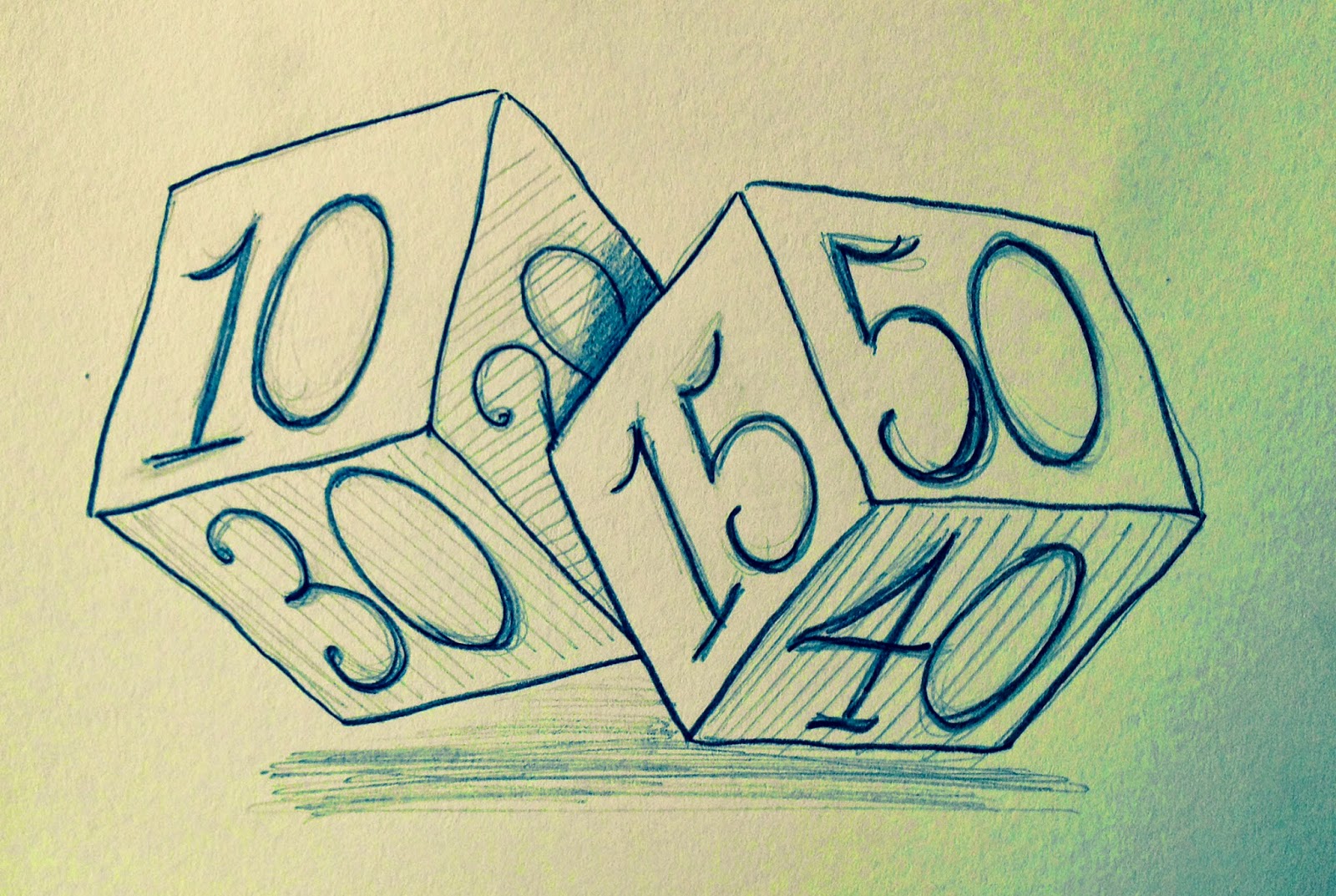
10 minute sketch-kinda sums it up. Depressing.


Thursday, July 10, 2014

NJ BOE Testimony Part III: Horror Stories from Paterson


Be sure to check out NJEA member testimony at the NJ State Board of Education Parts I and II.


So, you think you have it bad. You think your administrators didn’t fully implement the new evaluation system. You think you could have gotten a higher score in this domain or that. How would you like to be an educator in a state controlled district? Paterson Education Association member, Gennaro Tortoriello, paints a shocking picture of administrators gone wild in his state controlled district. And to think, the state took over Paterson because they deemed it 'failing'. If this is their idea of improvement, everyone at the department of education should resign.


◊◊◊◊◊◊◊◊◊◊◊◊◊◊◊◊◊◊◊◊


Thank you for your time. I would like to speak about the evaluation system that was very hastily implemented by the state without proper training for both administrators and teachers. As a grievance delegate in the Paterson Education Association, I have witnessed the effects of this unjust system throughout my school district on a daily basis. Here are some examples:
  • Some administrators have been told by their superiors that they are not allowed to give teachers high scores.
  • Some administrators have told teachers that they work in a failing school and failing district therefore there are no effective teachers. In School 13 70% of teachers have been placed on a CAP (Corrective Action Plan).
  • The principal of one school told the staff that 80% of them are incompetent and should not be educators.
  • In many of our schools special education teachers have been directed to not follow the legal mandates of student’s IEPs if they want to earn a proficient observation.
  • One administrator in School 18 has written fraudulent observations and has egregiously violated the terms of the collective bargaining agreement, state law, and district policy because tenure is “dead”, and “we can do whatever we want to them.”
  • Educators have been told that instruction must be data driven yet many administrators ignore data when conducting evaluations.
  • Educators have been told that lessons must be differentiated yet when instruction is modified teachers are told that their lessons are not rigorous enough.
  • When educators use the whole group instructional method they are sometimes told that they did not differentiate the lesson and did not make accommodations for exceptional students.
  • One administrator in a high school marked staff down for not creating ‘data walls’ where student test scores were to be posted as a way to make them improve. When association officials pointed out that that is a violation of student privacy rights protected by FERPA, the administrator told them to use student ID numbers instead. When the association pointed out that students are not supposed to publish or share their ID numbers, the administrator relented, but refused to reassess staff ratings.
  • The majority of staff rated partially effective or ineffective met their SGO’s. Can somebody explain how this is possible?

These are only some examples. There are many more. This system has created an environment of distrust in which the evaluation system is viewed as discipline and punishment rather than an opportunity for professional growth. As you can see, this system has led to an abuse of power by many administrators. Please repeal this system. (emphasis mine)

Thank you.

NJ BOE Testimony Part II: Was human error or intentional omission to blame for PARCC pilot report?

Be sure to check out Parts I and III in this series.


In part 2 of this series of posts on NJEA's July 9th lobby day at the state Board of Ed, Spanish teacher and education activist, Heidi Maria Brown, questions Data Commissioner Bari Erlichson's obvious omission of any negative feedback on the state's PARCC trials, and why some board members have not done more to get to the truth.

◊◊◊◊◊◊◊◊◊◊◊◊◊◊◊◊◊◊◊◊

Good afternoon. My name is Heidi Maria Brown. I’m here today with my family. My husband is helping me with our two boys, Johnny and Nicholas, both of whom attend the amazing public schools in Pitman, New Jersey. We came here today despite the fact that following testimony, we have a wake to attend and a funeral tomorrow. That is how important I feel this opportunity is.

Throughout the past school year, I attended three board of education meetings. Initially, the experience was very positive. However, over time, it became quite discouraging because it appears that my testimony has fallen on deaf ears.

I recently met with my legislative representative, Assemblyman Paul Moriarity (D4 – Camden, Gloucester). When I first spoke with Mr. Moriarity, he mentioned that some of my concerns could be explained by human error. I concurred that perhaps one or even two misstatements could be explained by human foil. However, the number and type of misstatements are worrisome considering that the Department of Education is also responsible for determining test scores and teacher evaluations.

At the May 7th BOE meeting, Data Commissioner Bari Erlichson evidently misspoke with regards to the number of hours students spend testing. Students test for four days, not one. And many of our students with IEPs and 504s test for about six hours a day, not two. That means that contrary to her statement, students were in testing anywhere from eight hours to as many as 24 hours. What will this mean for our students when they take the PARCC, which is a much longer test? Has anyone considered this? If the BOE doesn’t have an accurate understanding of testing conditions, due to misinformation, how can they properly serve our students? Again, this may have simply been a misstatement. So let’s look at another example.

Erlichson made statements and provided evidence regarding the success of the first PARCC pilot. When presenting social media clips regarding the public feedback, she presented 100% positive feedback. I found this surprising because I had spoken with several teachers in various districts who confirmed that the computers froze and the testing was problematic from a technology perspective. Several parents also posted negative feedback on Facebook regarding testing and the PARCC, but I saw no evidence of this in her report. Board member Edithe Fulton immediately questioned the lack of negative comments. The response to Ms. Fulton was that this was due to the “abbreviated” board session. Does that justify incomplete and allegedly misleading and one-side data presentation? Perhaps this omission was simply “human error”.

Furthermore, while the statement was made that 70 percent of districts piloted, it should be noted that only 10 percent of students within those districts were actually tested. This means that we really don’t have an accurate picture of what full implementation will mean for this fall. This method of cherry picking data to provide evidence seems to be more than a misstatement.

During this same board meeting, Erlichson depicted a doom and gloom report of New Jersey’s NAEP scores. Apparently, our growth was, “flat”. Later, after reviewing the results independently, I was surprised to see that New Jersey’s 8th graders are first in reading and second in math. Why was so little made of this success? Was this omission just a mistake?

Frankly, I’m beginning to wonder how accurately informed the board of education is, not to mention your level of engagement in terms of asking critical questions when questionable data is provided as truth. At the June 4th and 11th public hearings to examine the CCSS, only one board member, Joseph Fisicaro, attended. Why? I work two, sometimes three jobs, I have two little boys and I volunteer in my local township. I still found time to review the standards, draft feedback and give professional analysis of the World Language standards. Nobody had to pay me to show up. I did it, because I care.

During the past five months, I have witnessed enough testimony here at the BOE, at several legislative meetings, and throughout New Jersey, to know that there are serious problems with the implementation of the teacher evaluation, the PARCC testing and the leadership of our struggling, economically challenged districts like Newark, where under Cami Anderson’s deplorable leadership, the district spent $330,000 on take-out instead of school supplies, maintenance needs, technology upgrades, classroom teachers and aides. It was reported by NBC news that students will not have enough desks this year and teachers will have to take a pay freeze because Ms. Anderson felt it was appropriate to spent $22,000 a month for catering. I guess the chicken and sides must be good. But I digress.

In March, I witnessed the delivery of nearly 2,000 letters to the Board of Education from teachers, parents, and community members, imploring you to address these concerns. In May, despite the conflict of NJASK testing, several teachers reported similar concerns to the board. In June nearly 30,000 NJEA members participated in a town hall conference call with Senate President Steve Sweeney to discuss these concerns. But you don’t have to listen to me or my colleagues. All you have to do is read the paper, go online or watch the television to know that there is a real crisis - not with our schools - but with these un-vetted reforms being rushed to implementation.

And since it’s evident that many misstatements have allegedly been made due to human error, we need you to listen to us. The truth is we don’t really know if we’re ready for the technology demands of the PARCC. We don’t know how much this has cost or how much it will cost in the future. We don’t know that the data management system is secure or who will have access to our children’s personal, and legally protected data. The fact that Assembly Bill 3081 passed 72-4, and that the sister bill is to be posted for a senate vote tomorrow*, makes it clear that this process is not going well and we are not ready. (emphasis mine)

So, do what you need to do. I will follow my conscience and follow up with Assemblyman Moriarty. Because based on the information I provided, he agreed that there seems to be more than just, “human error” at play. I will continue to write letters to the editor and educate my community about opting out of the PARCC, a new NEA initiative, and we’ll just wait to see how this turns out. Ultimately, I will be able to sleep at night with a clear conscience.

Heidi Maria Brown has an MFA in theatre from Temple University and a BA in Spanish from Western Washington University. She has 10 years experience teaching in public schools and 9 years as an adjunct professor. She currently teaches Spanish in the Pittsgrove Township School District in Salem County, NJ.


* Note: As of this writing, it is not clear if S2154 will be posted for a full Senate vote. For all the breaking developments, be sure to follow Save Our Schools NJ on Facebook and Twitter.